Redesigning the Digital Experience at a Established Microfinance Bank
- Company
- FINCA Microfinance Bank
- Industry
- Fintech
- Role
- UX Designer and Researcher
- Year
- 2022
In a nutshell
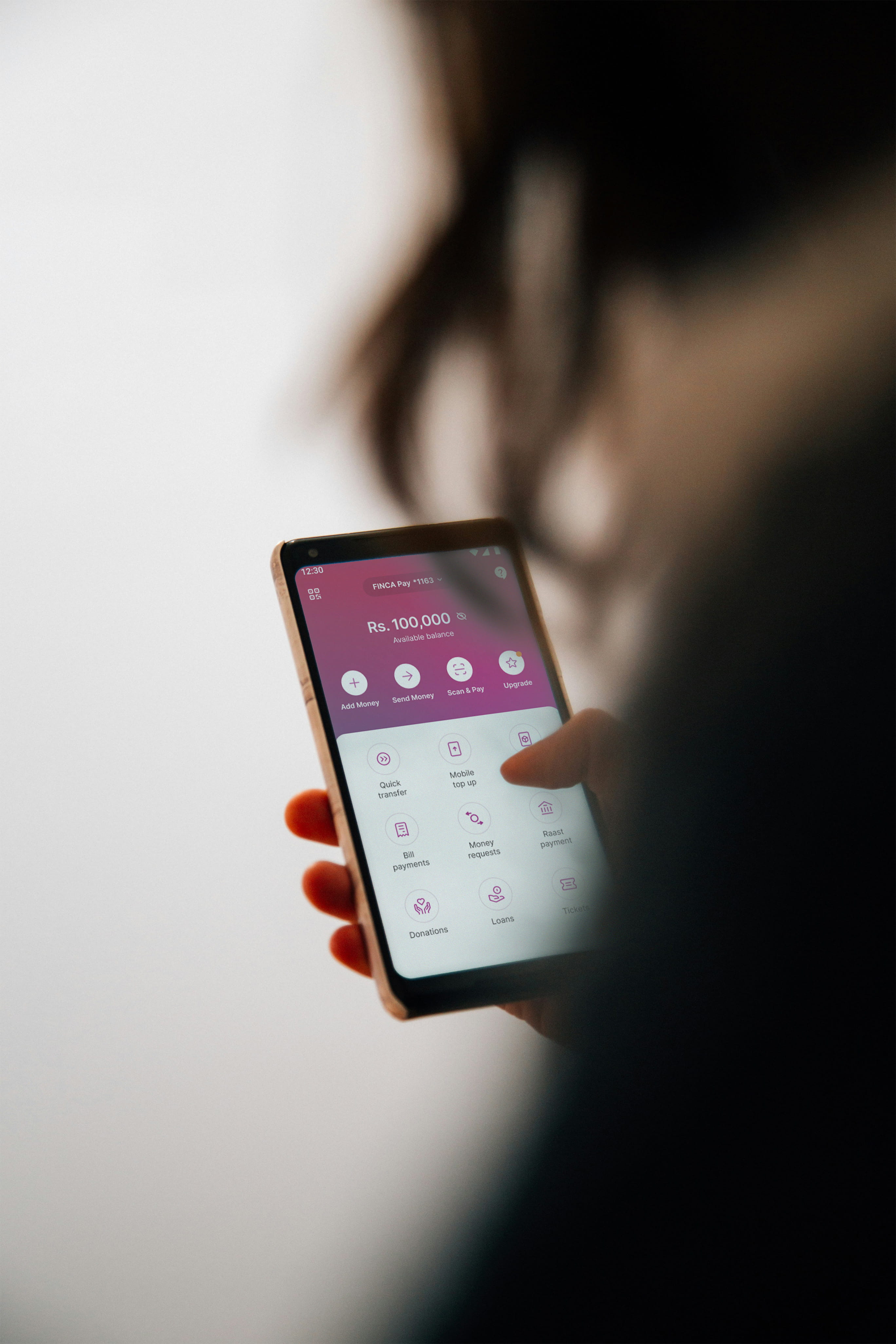
FINCA Microfinance Bank engaged IDEATE Innovation to redesign its mobile app to significantly improve adoption and retention among both low-tech users and younger, tech-savvy customers.
The project goal was to create a user-centric design that balanced simplicity and modern usability, increasing those baseline metrics while supporting financial inclusion.
The redesigned solution focused on simplifying user flows, improving onboarding and hierarchy, and increasing accessibility. By reducing user effort and improving transaction transparency, we were able to reach a 30% increase in customer retention rate.
My role
I worked across research and design, acting as a bridge between both disciplines.
Responsibilities included:
- Leading the UX audit of the existing app
- Conducting and synthesizing qualitative research
- Designing and testing low-fidelity concepts
- Contributing to the final high-fidelity designs and design system
Research
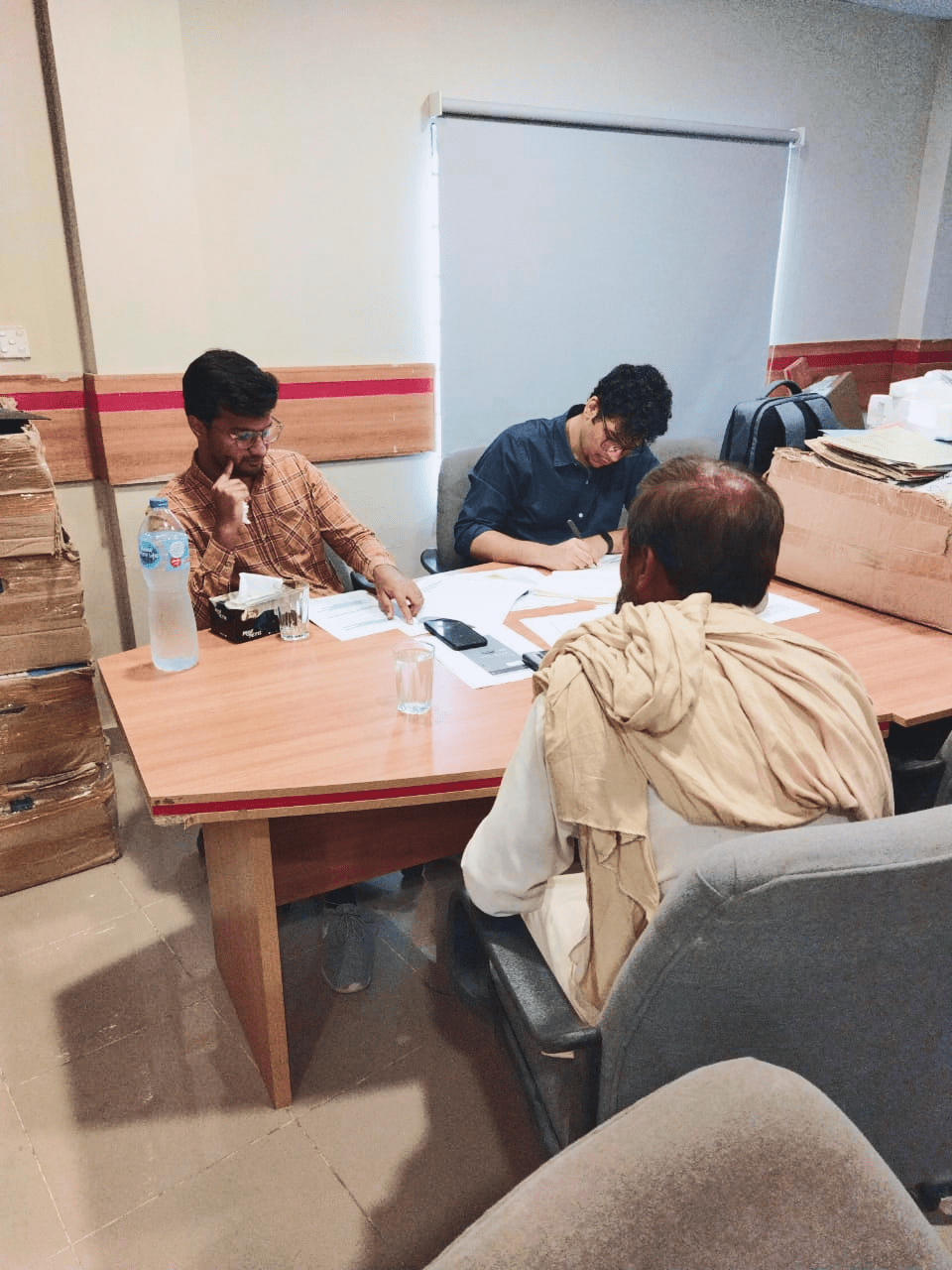
We engaged with internal stakeholders while simultaneously undertaking desk-research to understand the current landscape of DFS in Pakistan. Side-by-side, we conducted a thorough UX audit to define our qualitative research phase and lo-fi wireframes.
For our research, we employed the use of qualitative interviews and field testing of early prototypes.
In total, we conducted 26 individual interviews and 3 focus groups.
These users were segmented based on user types: male and female SMEs, students, young professionals, farmers, and payroll customers. These user groups were defined to better understand usage patterns.
Problem snapshot
Key Pain Points.
-
Users struggled to complete registration, especially biometric and signature capture.
-
Core financial actions (Send Money, Add Money) were buried and confusing to use.
-
Technical jargon and English-primary copy created confusion.
-
Users expressed distrust due to inconsistent system feedback (e.g., missing OTPs).
Design decisions
Onboarding and registration
Since most drop-off occurred after first use, we understood that onboarding and registration processes needed to be streamlined. We reduced the steps needed to get into the app, improved feedback on biometric capture, and introduced visually engaging onboarding screens to reassure users. The smaller cognitive load resulted in higher completion rates.
Home and navigation
Being a Fintech application, financial tasks are core to the experience. However, these were previously hard to find. We centralized key actions on the home screen, elevating high-frequency tasks such as Send Money and Add Money. We also implemented a new, more focused navigation system, implementing persistent bottom navigation along the way. This change decreased time to task completion significantly.
Transaction flows
Confusing task sequences during transaction flows created confusion amongst users, especially for those who were not as tech-literate. To reduce errors, we standardized the flow patterns throughout the application. Transaction amount entry was moved to the end of the flow to match mental models.
Accessibility and localization
Due to FINCA catering to a diverse target user base, we had to take varying tech literacy and language proficiency into account. We introduced bilingual support to the application, giving users who were not fluent in English to toggle the language to Urdu. We also created the design system with multi-language support in mind. Financial terminology was also significantly simplified. Improved visual hierarchy and clearer error states also helped users recover from errors quickly.
Outcome and impact
Our redesigned experience delivered a significant business and user experience impact. The application redesign and restructuring aligned with strategic targets, with greater clarity and accessibility for the diverse user base. We increase user satisfaction and adoption potential, with an increase in 30-day active users from 8% to 30%.
Longitudinal metrics were owned by the client and tracked post-handoff.
Reflection
This project deepened my experience designing for users with diverse literacy levels and strong trust sensitivities. I learned the value of early prioritization and tighter research scoping to prevent delays. Better communication frameworks with the client would have streamlined alignment.
Team